
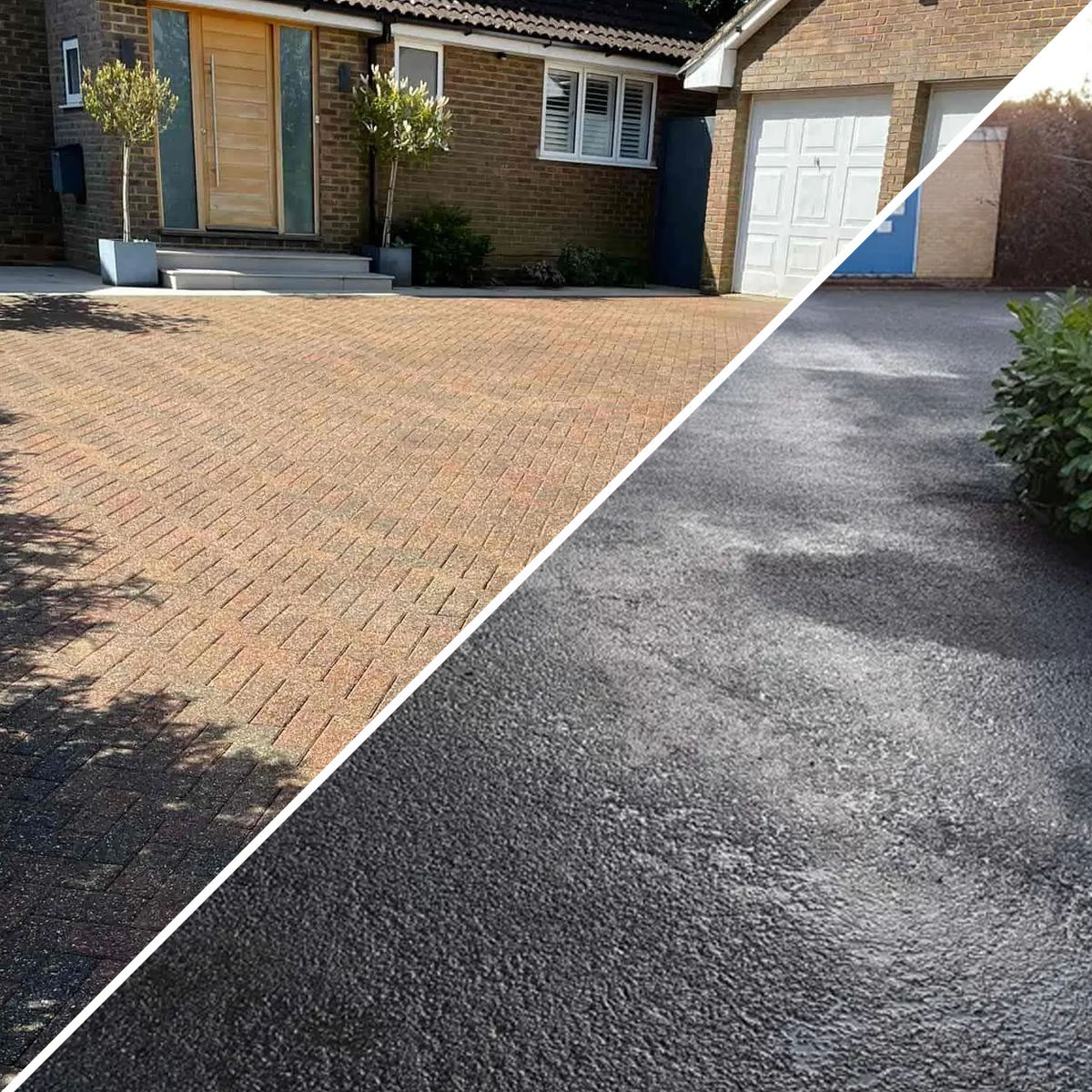
Block Paving vs Tarmac Driveway: Which is Better for UK Homes?
Choosing between block paving and tarmac is one of the most common decisions UK homeowners face when replacing or installing a new driveway. Both are popular, durable, and well-suited to the UK climate but they have meaningfully different costs, maintenance requirements, appearances, and lifespans that should influence your decision.
This guide gives you an honest, practical comparison of block paving and tarmac driveways to help you make the right choice for your property and budget.
Block paving
Block paving uses individual rectangular or shaped concrete or clay blocks laid in patterns on a prepared sand and aggregate base. The blocks can be arranged in herringbone, stretcher bond, basket weave, or other patterns, and are available in a wide range of colours, textures, and sizes.
Block paving is extremely popular in the UK for front driveways because of its attractive appearance, durability, and the fact that individual blocks can be removed and replaced if damaged by tree roots, subsidence, or heavy loads without having to resurface the entire driveway.
Tarmac
Tarmac (properly called asphalt) is a mixture of aggregate bound with bitumen that is laid hot and compacted to create a smooth, seamless surface. It is the same material used for road surfaces and is one of the most durable driveway options available.
Tarmac driveways are fast to install, cost-effective, and extremely hardwearing. The main limitation is appearance — standard tarmac is black and lacks the decorative variety of block paving. This can be addressed with tarmac painting, which refreshes the colour and provides an additional protective layer.
Maintenance requirements
Both surfaces require regular cleaning to maintain their appearance and extend their lifespan, but the nature of maintenance differs:
Block paving maintenance:
- Annual professional cleaning to remove moss, algae, oil staining, and embedded dirt
- Re-sanding of joints every two to five years as kiln-dried sand settles and washes out
- Sealing every three to five years to protect against staining and weed growth
- Individual block replacement if damaged (an advantage over tarmac)
- Weed treatment to prevent growth through joints
Tarmac maintenance:
- Periodic professional cleaning to remove oil stains, algae, and surface dirt
- Crack filling if surface damage occurs
- Tarmac painting or resurfacing every five to ten years to restore appearance and protect the surface
- Sealing to protect against oil penetration and weathering
Lifespan
Both surfaces, if properly installed and maintained, have long lifespans:
- Tarmac: 20 to 30 years with proper maintenance, potentially longer
- Block paving: 25 to 40 years or more, as individual blocks can be replaced indefinitely
The longevity advantage of block paving lies in its repairability. A cracked or subsided area of block paving can be lifted, the base repaired, and the blocks re-laid — often reusing the original blocks. Tarmac damage, by contrast, typically requires patching or full resurfacing of the affected area.
Appearance
This is where the two options diverge most significantly. Block paving offers far more design flexibility:
- Wide range of colours, from natural buff and charcoal to red and multi-colour blends
- Multiple laying patterns including herringbone (strongest), stretcher bond, and basket weave
- Can incorporate borders, contrasting insets, or pattern changes to create a bespoke design
- Can be colour-enhanced with professional sealant
Tarmac is limited to its natural black, though tarmac painting services can introduce colour variety. Some homeowners prefer tarmac’s clean, unfussy appearance, and the seamless finish suits more contemporary property styles.
Which is better for UK conditions?
Both surfaces perform well in the UK climate, but they have different vulnerabilities:
Block paving can be affected by weed growth through joints and by differential settlement if the base preparation is inadequate. In hard frosts, joints can expand and contract, occasionally causing block movement.
Tarmac can soften in very hot weather — a rarity in the UK but increasingly relevant with warming summers. Heavy vehicle traffic (delivery lorries, skips) can cause surface indentation if the tarmac has not fully cured.
For most UK residential driveways, both surfaces are entirely appropriate. The choice typically comes down to budget, aesthetic preference, and how long you plan to stay in the property.
Our recommendation
If budget allows and appearance matters to you, block paving delivers more design flexibility, better kerb appeal, and superior long-term repairability. If you want a cost-effective, durable, low-fuss surface and are less concerned with decorative variety, tarmac is an excellent choice.
Whatever surface you choose, professional driveway cleaning and sealing every three to five years is the single most important thing you can do to maintain its appearance and extend its life. A&R provides professional block paving cleaning and sealing and tarmac cleaning and painting throughout Hertfordshire, Bedfordshire, Buckinghamshire and North London. Call 01582 757304 for a free quote.
Call Now