
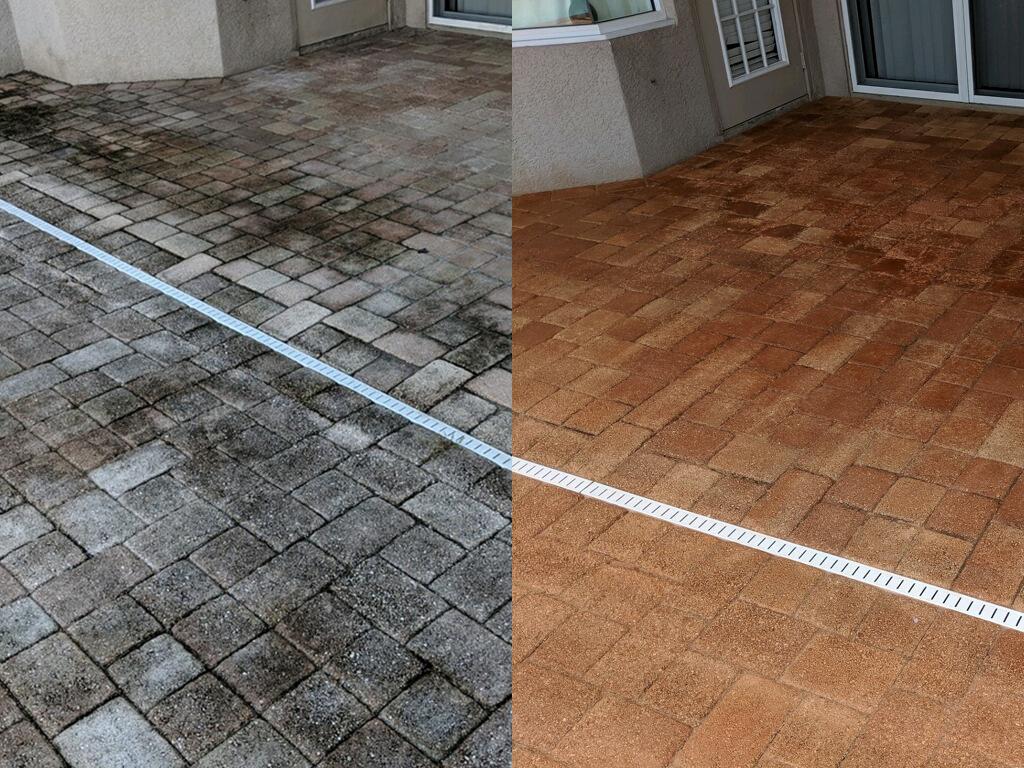
Ultimate Method to Restore Faded Patio Slabs without Replacing
When a patio starts to look grey, washed out and tired, many homeowners assume the only answer is to rip it up and start again. New paving, a new sub base, skips on the driveway and a week or more of disruption can easily run into thousands of pounds.
In our experience, that is rarely necessary. Since Alan and Russell started A&R, we have found that around 80% of the properties we visit can be restored with cleaning and sealing rather than replaced. Patio slabs that look faded beyond saving are very often still in good condition underneath. What has faded is the surface, and the surface is something we can work with.
This guide walks you through why patio slabs fade, how to tell whether yours can be brought back, and the full restoration method we use on patios across Hertfordshire, Bedfordshire, Buckinghamshire and North London.
Why Patio Slabs Lose Their Colour
Fading is not one single problem. It is usually a mix of several things happening at once, and the right restoration depends on which ones are affecting your patio.
Dirt and organic growth dulling the surface
This is the most common cause by far. A thin layer of dirt, algae and biofilm builds up on the surface over the years, sitting on top of the stone like a grey veil. Because it builds slowly, most people never notice it happening. They simply remember the patio being brighter when it was laid. In many cases, the original colour is still there and just needs uncovering.
Sunlight and weathering
UV light gradually breaks down the pigments used in coloured concrete slabs, which is why a deep red or charcoal slab can drift towards a pale, chalky shade. Rain, frost and foot traffic also wear away the very top layer of concrete slabs over time, exposing the coarser material beneath and making the surface look lighter and rougher. Natural stone is more stable, but it can still mellow and dull with years of exposure.
Efflorescence
If your patio has a white, powdery or crusty bloom on it, you are probably looking at efflorescence. It happens when moisture moves through concrete or mortar and carries natural salts to the surface. As the water evaporates, the salts are left behind as a white film that makes the whole patio look washed out. It is especially common on newer patios and after long wet spells.
Lichen and black spots
Lichen creates dark speckles that make a patio look patchy and old. Once it has been treated, the stone around the spots often looks lighter than expected, which is why lichen removal is an important part of any colour restoration.
Read about – patio black spot removal causes and prevention which is explained in more depth.
Stains that mask the true colour
Leaf tannins, rust from garden furniture, cement or mortar splashes left from the original build, oil and barbecue grease all sit on the surface and distort the colour of the slabs. These need targeted treatment rather than a general wash.
Harsh cleaning in the past
Acid based cleaners, strong chemicals and pressure washers held too close to the stone can strip and etch the surface. This leaves slabs looking rough, pale and uneven. Some of this damage can be improved, but it is a good reason to be careful with any future cleaning.
The Ultimate Method to Restore Faded Patio Slabs
This is the full process we follow when restoring a faded patio. Every patio is different, so we adapt each step to the stone, its condition and the result you want.
Step 1: Survey and test patch
We start by identifying exactly what the patio is made of. Indian sandstone, limestone, slate, granite, porcelain and concrete all respond differently to cleaning products and pressure. We look at the joints, the drainage, any stains and the level of growth. Where needed, we clean a small test area first so you can see the likely result before we go any further.
Step 2: Clear and protect
Furniture, pots and planters are moved, and nearby doors, render, plants and lawns are protected. This keeps the work tidy and stops cleaning water and treatments reaching anywhere they should not.
Step 3: Deep clean with the right pressure
We use professional rotary surface cleaners, which spin jets evenly across the stone. This removes the built-up dirt and biofilm without the zebra stripes and etching that a single jet lance can leave. Pressure and water flow are set to suit the surface, so delicate stone gets a gentler clean than hard wearing concrete.
Step 4: Targeted stain treatment
Once the general dirt is gone, the real stains become easier to see. We then treat them individually.
- Lichen and black spots are treated with a specialist product through our patio black spot removal service. Lichen fades gradually as the treatment works, so the full effect often continues to improve for a few weeks.
- Efflorescence is handled carefully. Wetting it repeatedly can draw up more salts, so we often dry brush it first and, where suitable, use a dedicated efflorescence remover. Sealing is held back until it has been dealt with.
- Rust, leaf tannin and grease stains are treated with products chosen for the specific stain and stone type.
Step 5: Biocide treatment
A professional biocide is applied to kill the algae, moss and lichen spores still living in the pores of the stone. Without this step, growth comes back quickly and starts dulling the colour all over again.
Step 6: Repoint where needed
Tired, crumbling or empty joints make a patio look old even when the slabs are clean. They also let water and weeds in. Our patio repointing service refills the joints with a durable jointing compound, giving the whole patio a crisp, finished look.
Step 7: Let it dry thoroughly
This is the step that is most often rushed and the one that matters most for the final finish. Stone must be completely dry before sealing. Sealing damp slabs can trap moisture and leave a cloudy, milky haze. Depending on the weather and the stone, this usually means waiting at least a day and sometimes longer.
Step 8: Seal with a colour enhancing finish
This is where the magic happens on a faded patio. Through our patio sealing service we apply a quality breathable sealer that soaks into the stone rather than sitting on top. A colour enhancing sealer brings back the depth of tone you saw in the water test, while a natural finish protects the stone without changing its look. Both help to lock out water, dirt, oil and organic growth so the restored colour lasts.
Restore or Replace ? How to Decide
Restoration is the right choice for most patios, but not all. Here is how we help customers decide.
Restoration makes sense when:
- The slabs are solid, level and not rocking underfoot
- The patio drains reasonably well
- The problem is dirt, growth, staining, faded colour or tired joints
- You like the layout and the stone and simply want it looking its best again
Replacement may be needed when:
- Many slabs are cracked, flaking or breaking apart
- Large areas have sunk or lifted because the base has failed
- Water pools badly across the patio even after the joints are repaired
- You want to change the size, shape or style of the patio completely
A restoration is usually carried out in one or two days, with no digging, no skips and a fraction of the cost and disruption of a new patio. It also keeps perfectly good stone out of landfill. If we survey your patio and feel replacement is genuinely the better option, we will tell you honestly.
Keeping Your Restored Patio Looking Its Best
- Sweep leaves and debris regularly, especially through autumn
- Lift plant pots occasionally to prevent rings and stains
- Clean up oil, wine and barbecue spills quickly
- Trim back plants that shade the patio or drop leaves onto it
- Book a light maintenance clean and biocide treatment every year or two
- Reseal every few years, depending on the product and how much the patio is used
You can compare our Bronze, Silver and Gold patio options on our packages page, and finance is available if you would like to spread the cost.
Bring Your Patio Back to Life
Before you spend thousands on a brand new patio, let us show you what your existing slabs can still look like. The A&R team restores patios week in, week out across Luton, Dunstable, St Albans, Harpenden, Watford, Hemel Hempstead, Milton Keynes, Aylesbury and the surrounding areas, and we are always happy to give honest advice.
Call 01582 757304 or request your free quote today, and find out how much colour is still waiting in your patio.
Call Now