
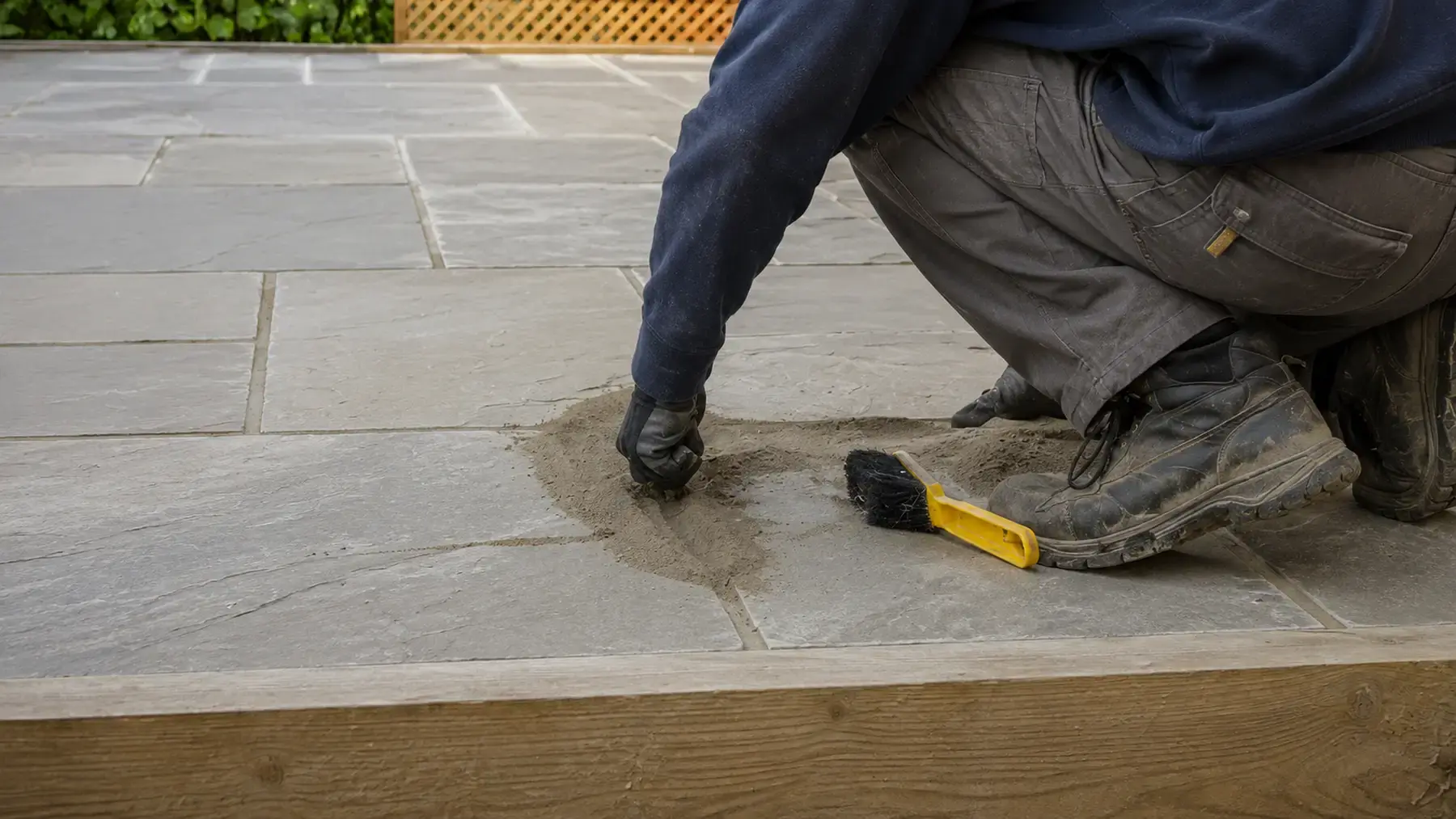
How Does Repointing Paving Stones Prevent Weed Growth?
You pull the weeds out on a Saturday, spray the joints with weed killer for good measure, and within a few weeks the green shoots are back between the slabs. If that sounds familiar, you are not alone. Weeds in patio joints are one of the most common frustrations we hear about from homeowners across Hertfordshire, Bedfordshire, Buckinghamshire and North London.
The reason weeds keep returning is rarely the weed itself. It is the joint. When the material between your paving stones cracks, crumbles or washes away, it leaves a ready-made seedbed. Repointing fixes that problem at its source.
In this guide we explain how repointing prevents weed growth, why it lasts far longer than weed killer, which jointing materials work best, and how we repoint patios for our customers.
The Quick Answer
Repointing prevents weeds by removing the old, failed joint material along with the roots and debris inside it, then refilling each joint to its full depth with a firm, durable jointing compound. With no gaps, no soil and nowhere for seeds to root, weeds struggle to establish. The new joints also shed rainwater, keep the slabs stable and stop ants digging out the gaps, so the patio stays weed free for much longer than it would with weed killer alone.
Where Patio Weeds Really Come From
Many people assume weeds push up from the soil beneath the patio. On a properly laid patio, most do not. Instead, they grow from the top down:
- The joints start to fail. Mortar cracks, sand washes away or the original pointing was never deep enough.
- Debris fills the gaps. Dust, soil, leaf litter and grit settle into the empty joints and slowly break down into a thin layer of compost.
- Seeds land and germinate. Wind, birds and garden plants drop seeds into the joints, where moisture and nutrients help them sprout.
- Roots spread and widen the gaps. As weeds and moss grow, their roots push the joint apart, letting in more water and debris.
The same top down process affects driveways too, as we explain in our article on why weeds keep coming back after a driveway is cleaned.
Why Patio Joints Fail in the First Place
- Frost. Water soaks into cracked mortar, freezes and expands, breaking it apart a little more each winter.
- Movement. Small amounts of settlement in the base can crack rigid sand and cement joints.
- Pressure washing. A jet held too close to the joints can blast out the pointing in seconds.
- Poor original work. Joints that were filled too shallow, with a weak mix or with dry sand alone often fail within a few years.
- Age and weathering. Even good mortar eventually wears away after years of rain, sun and foot traffic.
- Roots and ants. Weeds and ant colonies both loosen joint material and make the gaps bigger.
How Repointing Prevents Weed Growth
It removes the existing roots and debris
Before any new material goes in, the old joint is raked out. This removes the crumbling mortar, the compost layer that has built up inside the gap and the roots of existing weeds. Weed killer alone leaves all of that behind, which is why weeds come straight back.
It fills the joint to its full depth
A joint that is only filled at the surface can crack and hollow out underneath. Proper repointing fills the full depth of the joint, leaving no hidden voids for water, soil or roots to collect in.
It creates a hard surface seeds cannot root in
Seeds need loose material and moisture to germinate. A firm, well finished joint gives them nothing to grip onto, so most simply wash or sweep away.
It sheds water instead of holding it
Cracked and gappy joints hold water, keeping the area damp and feeding moss and weeds. New joints help rainwater run across the surface and away, so the patio dries more quickly.
It keeps ants out and slabs stable
Ants love loose joints because they are easy to dig into. Solid joints are much harder to excavate, and they also lock the slabs together, reducing the rocking and movement that can crack joints again.
It makes the patio easier to keep clean
Full, smooth joints let you sweep leaves and dirt away easily, so debris does not have the chance to build up and become a home for new weeds.
Which Jointing Method Works Best?
There are several ways to fill patio joints, and the right one depends on the type of paving, the width of the joints and how the patio is used.
|
Jointing method |
Best for |
Weed resistance |
Things to know |
|
Kiln dried sand |
Block paving |
Good when sealed, poor on its own |
Not suitable for most slab patios, as it washes out of wider joints |
|
Sand and cement mortar |
Traditional slab patios |
Good when new |
Rigid, so it can crack with frost or movement, and can stain stone if not cleaned off carefully |
|
Brush in resin jointing compound |
Most modern slab and natural stone patios |
Very good |
Quick to apply and slightly flexible, but needs the correct joint depth and width |
|
Slurry or pour in grout |
Wide joints and natural stone |
Very good |
Fills joints quickly, but needs careful cleaning of the slab surface |
For most patios we work on, a quality brush in resin jointing compound gives the best balance of durability, weed resistance and finish. On our Gold patio package we use Joint It, a professional jointing compound designed for this job.
Our Patio Repointing Process
Step 1: Survey
We check the type of stone, the width and depth of the joints, how much of the old pointing has failed and whether any slabs are loose or rocking. This tells us whether repointing is the right fix and which material to use.
Step 2: Deep clean and weed removal
The patio is cleaned with professional rotary surface cleaners, and existing weeds and moss are removed. You can find out more about this stage on our patio cleaning page.
Step 3: Raking out the old joints
The failed mortar, compost and roots are raked out to a sound depth. Jointing compounds need enough depth to bond and stay strong, and manufacturers usually recommend a depth of around 20mm, so this step is never skipped.
Step 4: Biocide treatment
A biocide is applied to kill remaining spores and roots in the joints and the stone, giving the new pointing the best possible start.
Step 5: Applying the new jointing compound
The compound is worked deep into every joint and compacted so there are no hidden gaps. Some products require the slabs to be dampened first, so we follow the manufacturer’s method closely for each material.
Step 6: Finishing and cleaning off
Excess material is brushed away and the slab surface is cleaned, leaving neat, even joints.
Step 7: Curing
The new joints need time to cure before heavy use. We will tell you how long to keep off the patio, which depends on the product and the weather. Rain and frost can affect curing, so we plan this work around the forecast.
Step 8: Optional sealing
Once everything has cured, a breathable patio sealing treatment can add another layer of protection against water, stains and organic growth.
You can learn more on our patio repointing page.
Repointing Compared With Other Weed Solutions
|
Method |
How long it works |
Why |
|
Pulling weeds by hand |
Days to weeks |
Roots and seeds are left in the joints |
|
Weed killer |
Weeks to a few months |
Kills existing growth, but the gaps and debris remain |
|
Pressure washing the joints |
Often makes it worse |
Blasts out more joint material, creating bigger gaps |
|
Cleaning, biocide and repointing |
Years |
Removes the cause by closing the gaps where weeds grow |
Signs Your Patio Needs Repointing
- Lines of weeds or moss following the joints
- Empty, sunken or hollow joints
- Crumbling or cracked mortar
- Slabs that rock or move when you step on them
- Ants bringing sand or soil up to the surface
- Water pooling in the gaps after rain
Not every patio needs repointing, and sometimes a thorough clean is enough. Our guide on how to tell if your patio needs repointing or just a clean explains the difference.
When Repointing Is Not Enough
Repointing works best when the slabs themselves are sound and stable. If large areas of the patio have sunk, slabs are badly cracked or the base underneath has failed, new joints will crack again as the patio moves. In those cases some slabs may need to be lifted and relaid first. We will always give you an honest assessment before any work begins.
Keeping Your Repointed Patio Weed Free
- Sweep regularly, especially in autumn, so leaves and dirt do not build up on the surface
- Pull out any seedlings while they are tiny, before roots take hold
- Avoid using a pressure washer close to the joints
- Book a light clean and biocide treatment every year or two
- Consider sealing to add extra protection
Frequently Asked Questions
Will weeds never come back after repointing?
Repointing dramatically reduces weed growth, but seeds will still land on your patio. If dirt is allowed to build up on top of the joints, the odd weed may appear. Regular sweeping keeps these to a minimum.
Can patios be repointed in winter?
Repointing needs dry weather and temperatures above freezing while the compound cures. Mild, dry spells in winter can work, but spring to early autumn usually gives the most reliable results.
How long before I can walk on a repointed patio?
This depends on the product and the weather. Many jointing compounds need around a day before light foot traffic, but we will give you clear guidance for your patio.
Is repointing suitable for Indian sandstone?
Yes. Indian sandstone patios respond very well to repointing with a suitable jointing compound, and the new joints help show off the colour and texture of the stone.
Do I need to seal my patio after repointing?
It is not essential, but sealing adds protection against water, stains and growth, and helps the patio stay cleaner for longer. Our Gold patio package includes cleaning, biocide, sealing and repointing.
Can block paving be repointed?
Block paving is usually jointed with kiln dried sand rather than mortar. Instead of repointing, it is cleaned, resanded and sealed to lock the sand in place. See our driveway sealing service for more.
Say Goodbye to Weeds Between Your Slabs
If you are tired of spending weekends pulling weeds from your patio, repointing tackles the problem where it starts. Clean, solid joints keep weeds out, keep slabs stable and make your whole patio look sharper.
Alan, Russell and the A&R team repoint patios across Luton, Dunstable, St Albans, Harpenden, Watford, Hemel Hempstead, Milton Keynes, Leighton Buzzard and the surrounding areas. Compare our Bronze, Silver and Gold patio options on our packages page, call 01582 757304 or request a free quote today.
Call Now