
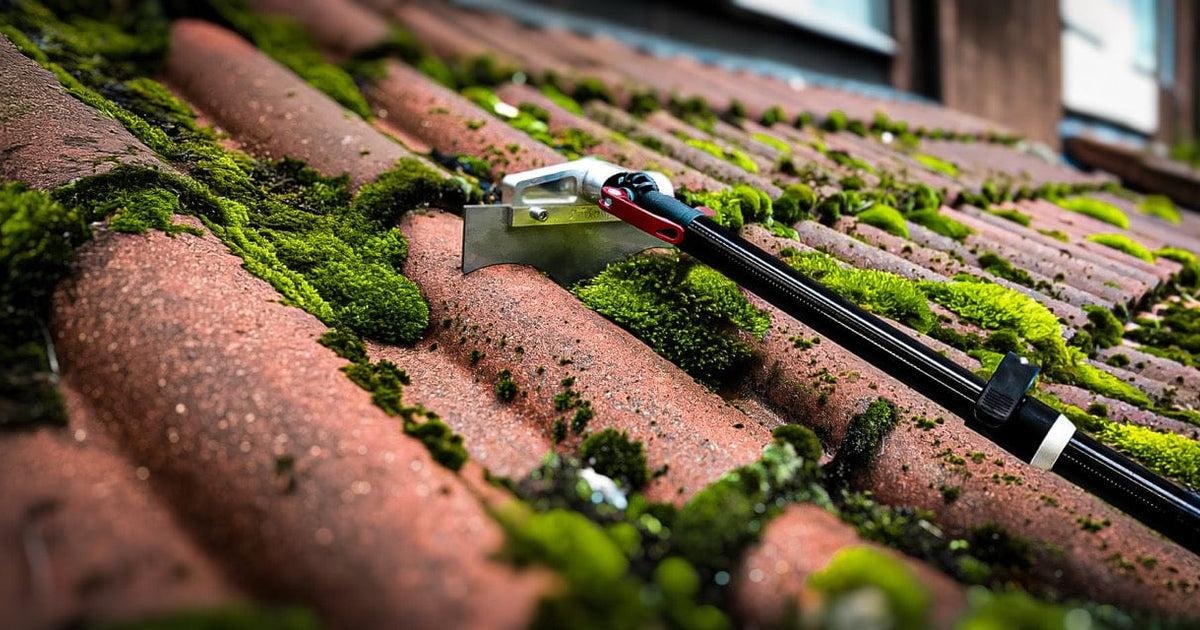
How Lichen Moss Removal Prevent Long Term Damage
Of all the growth we deal with on roofs, patios and driveways, lichen is the one homeowners find most frustrating. It looks like small grey, yellow or black spots, it barely seems to grow, and it refuses to budge with a brush, a hose or even a pressure washer. Many people call it lichen moss, although lichen and moss are actually very different things.
Lichen is slow, but it is persistent. Left alone, it can stay on a surface for many years, holding moisture and gradually roughening the stone or tile underneath. In this guide we explain what lichen is, how it damages your home over time, why it is so hard to remove and how professional lichen removal protects your surfaces for the long term.
The Quick Answer
Lichen removal prevents long term damage by killing and removing a growth that bonds tightly to tiles, slate, stone and concrete, holds moisture against the surface and slowly roughens it over time. Rough, damp surfaces wear faster, suffer more frost damage, stain more easily and give moss and algae an easy place to settle. Because lichen grips so firmly, it is best treated with a professional biocide, which kills it so that it fades away over the following weeks, followed by sealing where suitable to slow its return.
What Is Lichen?
Lichen is not a plant and it is not a moss. It is a partnership between a fungus and an algae, or sometimes a cyanobacteria, living together as one organism. The algae produces food through sunlight, while the fungus provides structure and grips the surface.
Lichen comes in several forms:
- Crusty lichen, which grows flat and tight to the surface and is very common on roof tiles, slate and paving
- Leafy lichen, which forms small flat lobes that lift slightly at the edges
- Bushy lichen, which grows in small branching tufts, usually on trees and fences rather than buildings
On patios, lichen often appears as the black spots many homeowners notice on sandstone and concrete slabs. Our article on patio black spot removal causes and prevention covers this in detail.
Lichen and Moss: What Is the Difference?
|
Lichen |
Moss |
|
|
What it is |
A fungus and algae living together |
A small, simple plant |
|
Appearance |
Flat spots or crusts, grey, yellow, green or black |
Soft green or brown cushions |
|
How it attaches |
Grips tightly into the surface |
Thin strands hold onto rough surfaces |
|
Growth speed |
Very slow |
Faster, especially in damp shade |
|
Ease of removal |
Very difficult by hand or water alone |
Easier to lift by hand |
|
Where it grows |
Roofs, slate, stone, paving, walls, even sunny spots |
Mostly damp, shaded areas |
The two often grow side by side, which is why the term lichen moss is so widely used. Lichen frequently arrives first on a clean surface, roughening it and making it easier for moss to follow.
How Lichen Causes Long Term Damage
It grips into the surface
Lichen anchors itself tightly into the tiny pores and texture of the material it grows on. On porous surfaces such as concrete tiles, sandstone and older clay tiles, this grip is especially strong.
It slowly roughens the surface
Over long periods, lichen can contribute to the gradual weathering of stone and tile surfaces. As it grows, dries and swells, it can loosen tiny particles from the surface. Lichens are also known to produce natural acids that can slowly affect some types of stone. A rougher surface absorbs more water and gives other growth more places to settle.
It holds moisture
Lichen absorbs water when it rains and releases it slowly. That keeps the surface underneath damp for longer, which adds to the wear on roofs and paving.
It encourages frost damage
Damp, porous surfaces are more vulnerable in winter. Water held in the surface freezes and expands, which can cause flaking and cracking, particularly on older concrete tiles and softer natural stone.
It makes way for moss and algae
A surface roughened and dampened by lichen is an ideal home for moss and algae. On roofs, that leads to thicker growth, lifted tiles and blocked gutters. On patios, it leads to slippery, green slabs.
It leaves lasting stains
The longer lichen stays, the deeper its marks can become. Older lichen spots can leave pale or dark ghost marks that take longer to fade after treatment.
Where Lichen Does the Most Damage
|
Surface |
Common signs |
Long term risk |
|
Concrete roof tiles |
Grey or yellow crusty patches |
Rougher, more porous tiles that grow moss faster |
|
Clay tiles and slate |
Pale crusts and spots |
Surface weathering and lifted growth around tile edges |
|
Indian sandstone patios |
Black spots that will not scrub off |
Patchy, stained slabs and slippery surfaces |
|
Concrete slabs and block paving |
Grey and black dots |
Dull, stained paving that looks older than it is |
|
Walls and copings |
Orange, yellow or grey patches |
Gradual surface wear and staining |
Why Lichen Is So Hard to Remove
Most homeowners first try scrubbing, a hose or a pressure washer. These rarely work, for three reasons:
- Lichen bonds so firmly that brushing only removes the top layer.
- High pressure can damage the surface before it removes the lichen, especially on roofs and sandstone.
- Removing what you can see is not enough. Unless the lichen is killed, the remaining parts regrow.
The most effective approach is to kill the lichen with a professional biocide, then let nature do the rest. As the treatment works and rain rinses the surface, the dead lichen gradually loosens and fades.
How Professional Lichen Removal Works
- Assessment. We identify the surface and the type of growth, so we can choose methods and products that are safe for it.
- Cleaning. Loose dirt, moss and algae are removed using low pressure methods on roofs and controlled rotary cleaning on patios and driveways.
- Lichen treatment. A specialist treatment is applied to kill the lichen. On roofs this is part of our biocide treatment, and on patios it is part of our patio black spot removal service.
- Time to work. Lichen does not usually disappear on the day. Spots fade gradually over the following weeks as the treatment works and rain washes the residue away.
- Protection. Once the surface is clean and dry, sealing can help slow the return of lichen, moss and algae. See our roof sealing and patio sealing services.
What to Expect After Treatment
|
Timeframe |
What you will see |
|
Same day |
Moss, dirt and algae removed, lichen spots still visible but treated |
|
First few weeks |
Lichen spots start to lighten and break up |
|
Several weeks on |
Most spots faded, with very stubborn or old lichen taking a little longer |
|
Following months and years |
Biocide and sealing slow regrowth, keeping surfaces cleaner |
Mistakes to Avoid
- Pressure washing close to the surface. It can etch sandstone, erode roof tiles and blow out joints and mortar without removing the lichen.
- Using strong acids. Acid cleaners can burn limestone, sandstone and concrete, leaving permanent marks.
- Scraping with metal tools. This scratches the surface and makes regrowth easier.
- Expecting instant results. Lichen treatment works over weeks, not minutes. Patience gives a better, safer result.
- Sealing over live lichen. Any sealer must go onto a clean, treated and fully dry surface.
How to Keep Lichen From Coming Back
- Keep surfaces clean and free of leaves and debris
- Trim back trees and hedges to let in more light and air
- Book a light clean and biocide treatment every year or two on patios, and every few years on roofs
- Seal suitable surfaces to reduce water absorption
- Deal with new spots early, before they spread
Frequently Asked Questions
Is lichen harmful to my roof?
Lichen grows slowly, but over time it holds moisture, roughens tiles and makes it easier for moss to grow. Removing it helps protect the roof surface and keeps the roof drier.
Why do black spots stay on my patio after cleaning?
Those spots are usually lichen, which bonds too tightly for normal cleaning to remove. They need a specialist treatment and then fade over the following weeks.
Can a pressure washer remove lichen?
Rarely without causing damage. High pressure can etch stone and erode tiles while leaving much of the lichen behind.
How long does lichen take to disappear after treatment?
Most lichen fades over several weeks as the treatment works and rain rinses the surface. Older or thicker lichen can take a little longer.
Will lichen come back?
Spores are always in the air, so lichen can return eventually. A biocide treatment and sealing slow regrowth significantly, and regular maintenance keeps it under control.
Is lichen a sign of clean air?
Some types of lichen are sensitive to air pollution, so they can be a sign of good air quality. Unfortunately, that does not make them any better for your roof or patio.
Protect Your Surfaces From Lichen
Lichen may be slow, but it is one of the most persistent forms of growth on a home. Treating it properly protects your roof tiles, slate and paving from long term wear, staining and the moss that often follows.
The A&R team remove lichen from roofs, patios and driveways across Luton, Dunstable, St Albans, Harpenden, Watford, Hemel Hempstead, Milton Keynes, Leighton Buzzard and the surrounding areas. Call 01582 757304 or request a free quote today.
Call Now