
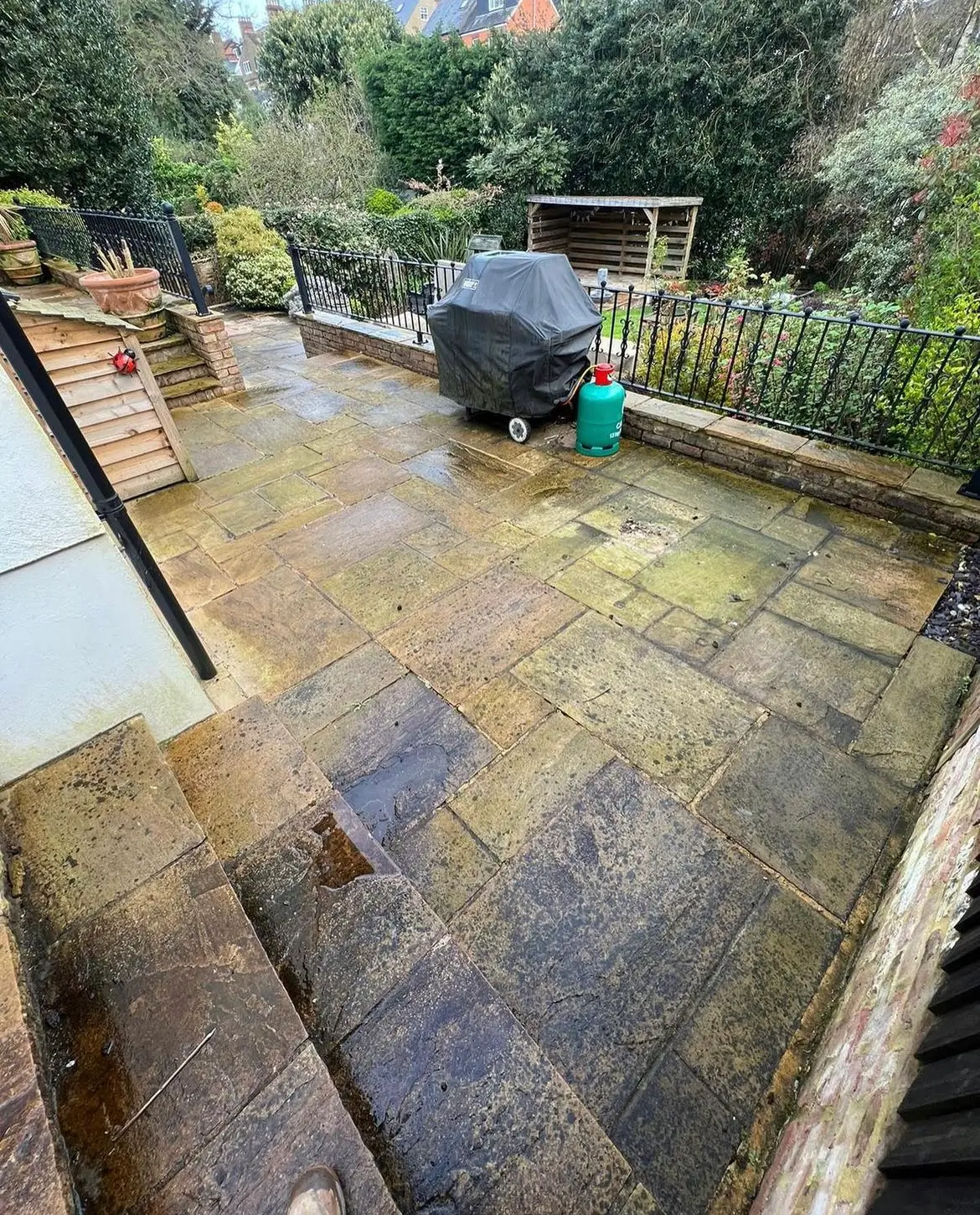
Patio Black Spot Removal: Causes and Prevention
If your patio has developed dark, crusty patches that won’t shift no matter how hard you scrub, you’re likely dealing with black spot, a stubborn form of lichen that’s one of the most common complaints we hear from UK homeowners. Unlike general dirt or algae, black spot bonds directly to the surface of the stone, which is why so many DIY attempts end in frustration.
This guide explains what causes black spot on patios, how it differs from moss and algae, and the steps that actually work to remove it and stop it coming back.
What Causes Black Spots on a Patio?
Black spot is lichen, a slow-growing organism that’s part fungus, part algae. It thrives on porous paving surfaces such as natural stone, sandstone, and older block paving, particularly in shaded, damp corners of a garden where the surface rarely gets a chance to dry out fully. Once established, lichen forms a protective biofilm and grows root-like structures into the microscopic pores of the stone, which is exactly why it’s so difficult to remove with simple washing.
UK gardens are especially prone to this because of the combination of rainfall, overhanging trees, and north-facing patios that stay damp for much of the year. The longer black spot is left untreated, the more established it becomes, and on softer stones like sandstone, it can gradually contribute to surface erosion over time.
Black Spot vs. Moss vs. Algae: What’s the Difference?
These three types of growth are often confused, but they respond to very different treatments. The table below breaks down how to tell them apart.
| Growth Type | Appearance | Removal Approach |
| Black spot (lichen) | Dark, crusty, slightly raised patches, bonded tightly to the stone | Biocide treatment to kill the organism, then pressure washing to lift dead material |
| Green algae | Slippery green film across the surface | Usually lifts with standard cleaning and biocide, no repeat treatment needed |
| Moss | Soft, cushion-like green growth in joints and shaded areas | Scraped or washed away, biocide prevents fast regrowth |
Why Pressure Washing Alone Doesn’t Work
Because lichen’s root structures sit inside the pores of the stone, a jet washer typically only strips away the visible top layer, leaving the roots intact underneath. Within weeks or months, the same spots tend to reappear in exactly the same places. Effective patio black spot removal needs a specialist biocide treatment applied first, given time to penetrate and kill the organism, before any pressure washing takes place.
Why DIY Products Often Fall Short
Off-the-shelf black spot removers can help with very light spotting, but they’re generally weaker than the biocides used professionally, and getting the dilution and dwell time right makes a real difference to the result. For heavier, long-established lichen, a professional treatment tends to be both faster and more thorough than repeated DIY attempts.
How Professional Black Spot Removal Works
A typical treatment involves applying a specialist biocide directly to the affected areas and allowing it time to penetrate and kill the lichen, sometimes overnight or over several days for heavier buildup. Once the treatment has worked, patio pressure washing service lifts the dead material away without needing excessive force. Particularly stubborn patches may need a second application to fully clear.
- Light spotting can often be treated and cleared in a single visit
- Heavier, long-term buildup may need several days for the treatment to work before washing
- Some stubborn patches require a repeat application for a complete result
Preventing Black Spots From Coming Back
Black spot can return, especially in shaded, damp areas where lichen spores are naturally present. Regular patio cleaning catches new spots early, before they become established, while keeping the area free of leaf litter and overhanging branches reduces the shade and moisture lichen relies on.
For longer-lasting protection, patio sealing after treatment significantly reduces the chances of regrowth. A sealed surface is far less hospitable to lichen spores than an untreated one, meaning the same patch is much less likely to reappear.
When Black Spot Signals a Bigger Repointing Issue
If your patio’s joints have started to crack or crumble, they can trap moisture and debris in exactly the conditions lichen needs to establish itself. In these cases, cleaning alone won’t fully solve the problem. A professional patio repointing service restores the joints between paving stones, stopping water penetration and giving black spot far fewer places to take hold in the first place.
What Does Professional Black Spot Removal Cost?
Black spot treatment is usually priced as an addition to a standard patio clean, reflecting the extra time needed for biocide application and, in some cases, a repeat treatment. For a full breakdown of typical UK pricing, including what’s included in a standard quote and what’s usually charged as an extra, see our patio cleaning cost guide.
Choosing a Professional for Patio Black Spot Removal
If black spot has taken hold on your patio, look for a contractor who can demonstrate:
- Checkatrade, TrustATrader, or Which Trusted Trader accreditation
- Experience treating your specific surface type, natural stone, flagstone, block paving, or porcelain
- Use of a proper biocide treatment rather than pressure washing alone
- A clear explanation of dwell time and, if needed, a repeat treatment
- The option to combine treatment with patio sealing for longer-term prevention
A patio that’s been professionally treated for black spot, then sealed, tends to stay clear for far longer than one that’s only ever pressure washed. If you’re dealing with stubborn dark staining right now, our patio black spot removal page has more detail on the treatment process we use across all patio surfaces.
Related Reading: Patio Black Spots Removal: Black Spots On The Patio Surface
Stubborn Black Spots Ruining Your Patio?
A&R Roof & Hard Surface Cleaning & Restoration offers free, no-obligation quotes for patio black spot removal across UK.
Call 01582 757304 or request a free quote.
Call Now