
Biocide Roof Moss Treatment Explained: Benefits, Safety & Results
If your roof is starting to look green, patchy or streaked, moss and algae are almost always the cause. It’s one of the most common calls we get across Hertfordshire, Bedfordshire, Buckinghamshire and North London, where frequent rain, mild temperatures and plenty of shaded, north-facing roofs give moss exactly the conditions it needs. Most homeowners book a roof clean to deal with the moss they can see. The question we get asked far more often, usually while we’re packing up the van, is the one that actually matters most: how do you stop it coming straight back?
The honest answer, and the one we give on every job, is roof biocide treatment. This guide explains what it actually is, how we apply it, whether it’s safe around family and pets, and what results you should realistically expect based on the jobs we run week to week, not a generic overview.
What Is Biocide Roof Moss Treatment, and How Is It Different From Cleaning?
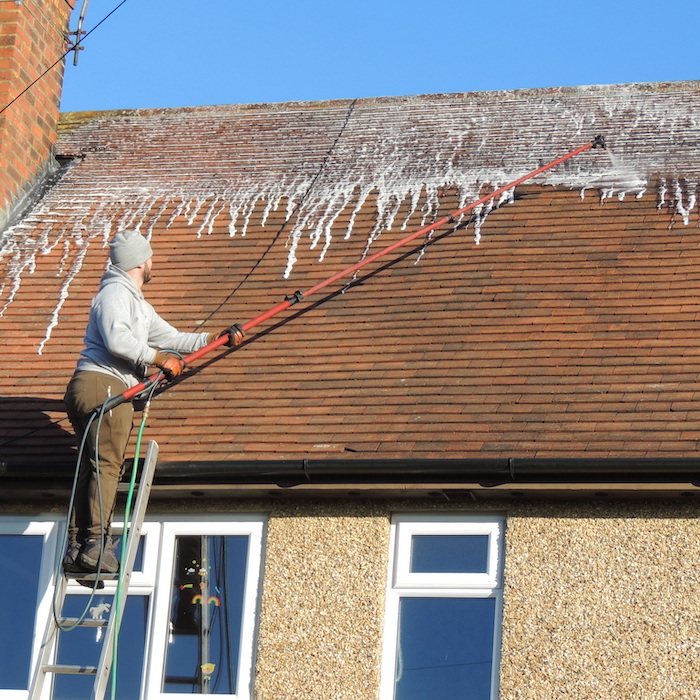
A biocide roof treatment is a specialist solution applied to the roof after cleaning, designed to kill the moss, algae, lichen and mould spores that a physical clean can’t fully remove. Biocides used for roof moss treatment are typically broad-spectrum, quaternary-ammonium-based formulations the same general class covered under the UK’s Biocidal Products Regulation (BPR), which governs how these products must be manufactured, labelled and applied. We use Smartseal-approved treatments as part of our accreditation, applied by City & Guilds-certified softwashing technicians.
The distinction that matters here is simple: cleaning removes what you can see. Biocide treats what you can’t. Roof moss removal without a follow-up treatment leaves spores embedded in the joints and gaps between tiles invisible on the day, but enough to re-establish visible moss within a matter of months.
How We Actually Apply It, Step by Step
Biocide roof moss treatment involves several important steps to help control moss growth while protecting the roof’s condition. The process may vary depending on the roof type, the extent of moss build-up and the treatment product used.
Step 1: Roof Inspection and Assessment
We inspect the roof to identify the type of tiles, roof pitch, shaded areas and the extent of moss and lichen growth. This assessment helps determine the most suitable cleaning method and biocide treatment for the roof.
Step 2: Manual Moss and Lichen Removal
Where necessary, we carefully remove thick, established moss using suitable tools, such as a roof moss scraper. Understanding the difference between roof moss removal and roof cleaning can help homeowners choose the right approach for their roof.”
Step 3: Gutter Clearing and Debris Removal
After removing the loose moss, we clear the gutters and remove accumulated debris to help prevent blockages. This step also helps maintain proper rainwater drainage during subsequent rainfall.
Step 4: Biocide Treatment Application
We apply a suitable biocide solution using an appropriate low-pressure spraying method. The product is diluted and applied according to the manufacturer’s instructions to target remaining moss, algae and other susceptible organic growth.
Step 5: Drying and Treatment Period
After application, the biocide is allowed to work for the period specified by the manufacturer. Treatment is avoided during unsuitable weather conditions, such as heavy rain or strong winds, which may affect application and increase the risk of spray drift.
Step 6: Results and Ongoing Maintenance
Over the following weeks or months, treated moss may gradually weaken, change colour and weather away naturally. The time required depends on the treatment product, weather conditions and the amount of existing growth. Periodic roof inspections and gutter clearing can help in maintaining how long a roof clean lasts which results and identify any further maintenance needs.
Benefits of using Biocide Roof Moss Treatment
Biocide roof moss treatment is a practical option for homeowners looking to manage moss, algae and other organic growth. When the treatment is suitable for the roof material and applied correctly, it can offer several benefits about using the Biocide treatment beyond improving the roof’s appearance.
1. Helps Control Moss and Organic Growth
One of the main advantages of biocide treatment is its ability to target moss, algae and certain other types of organic growth. Unlike methods that focus only on removing visible moss, biocides work against susceptible organisms on the treated surface. This helps control existing growth and supports a more effective roof maintenance approach.
2. Helps Reduce Future Moss Regrowth
Moss commonly develops in damp, shaded areas where moisture remains on the roof for extended periods. Biocide treatment can help slow the return of moss by targeting the organisms responsible for its growth. Although it cannot prevent regrowth indefinitely, appropriate treatment and regular maintenance can help keep moss under control for longer.
3. Offers a Less Disruptive Cleaning Approach
Aggressive pressure washing or excessive scraping can damage vulnerable roof coverings, loosen tiles or force water into areas where it should not enter. Depending on the roof’s condition, biocide treatment can provide a less physically aggressive alternative for controlling organic growth. Using a suitable treatment method helps minimise unnecessary disturbance to the roof surface.
4. Improves the Appearance of the Roof Over Time
Thick moss and green organic deposits can make a roof appear dirty and poorly maintained. Biocide treatment helps address the growth responsible for this appearance. As the treated moss gradually weakens and weathers away, the roof can become cleaner and more presentable. Results are not always immediate, as the natural removal of dead growth may take several weeks or months.
5. Supports Long-Term Roof Maintenance
Moss can retain moisture on roof surfaces, while detached growth may contribute to blocked gutters and rainwater outlets. Controlling moss helps reduce these maintenance concerns and makes it easier to monitor the roof’s condition over time. Combined with regular inspections and gutter maintenance, biocide treatment can form part of a long-term roof care plan.
What’s Actually in a Biocide Treatment, and Is It Safe?
This is a fair question, and one we’re always upfront about. Because it’s a chemical treatment, it has to be handled with proper training and care but when applied correctly, it’s widely used across the UK roofing and exterior cleaning trade and considered safe for residential and commercial properties.
On every job, our trained technicians:
- Apply at the correct, manufacturer-specified dilution never guessed or approximated on site
- Cover or divert run-off away from ponds, water features and sensitive planting before starting
- Follow COSHH (Control of Substances Hazardous to Health) handling procedures, in line with HSE guidance for biocidal products
- Advise you on re-entry times for pets and children typically once the treatment has dried, usually within a few hours in good weather
If you’re considering a shop-bought roof moss spray killer as a DIY alternative, it’s worth knowing the difference isn’t just the price. Off-the-shelf products are often lower-concentration and applied without the roof-safe technique that prevents run-off staining or uneven coverage which is why DIY results are frequently patchy compared with a professionally applied biocide treatment.
Biocide Treatment vs Pressure Washing: What Actually Works Better
| High-Pressure Washing | Biocide Treatment | |
| What it targets | Surface dirt and visible moss | Spores and organic growth at the source |
| Risk to tiles | Can crack tiles or force water underneath | Low-pressure, gentle on tile surfaces |
| Regrowth speed | Often faster, since spores survive | Slower typically 2 to 5 years before regrowth |
| Best used as | Rarely recommended alone on roofs | Standard aftercare following manual removal |
For nearly every roof we work on, the combination that holds up best is manual moss removal followed by biocide treatment not pressure washing on its own, which we generally avoid on tiled roofs because of the tile-damage risk.
What Results Should You Actually Expect?
It helps to set realistic expectations here, because biocide treatment doesn’t work instantly. On a typical semi-detached roof the kind we treat regularly in St Albans, Watford and Harpenden customers usually see:
- Visibly cleaner tiles within days of the initial clean
- Staining and black spot algae continuing to fade over the following weeks, especially after rain
- Noticeably slower moss return compared with an untreated roof over the following year
A small amount of surface growth returning within a few months is normal spores travel by wind, rain and birds and will land on any roof eventually. What a proper treatment does is significantly slow that process down, not stop it permanently. That’s why we back our work with a written 3–5 year no-moss regrowth guarantee, depending on the package.
How Long Does It Last, and How Often Should It Be Reapplied?
Most roofs we treat hold up well for 2 to 5 years before a top-up is worth considering.
Where your roof sits within that range depends on:
- How much shade and tree cover the roof gets
- Local rainfall and how quickly the roof dries out after wet weather
- Tile age and porosity older concrete and clay tiles hold moisture longer than slate
- Roof orientation north-facing slopes typically need attention sooner than south-facing ones
Heavily shaded or tree-covered roofs are often better served by a biocide top-up every 2 to 3 years, rather than waiting for visible moss to build up again before booking a full re-treatment.
Common Mistakes That Undermine Biocide Treatment
We regularly get called out to re-treat roofs where an earlier job didn’t hold up as expected. In almost every case, it comes down to one of a few avoidable mistakes skipping manual removal first, applying treatment in the wrong weather conditions, or using a diluted, low-concentration product to cut costs.
Know about the Common Mistakes to Avoid While Applying Biocide Treatment.
FAQ
Q1 – Does biocide treatment permanently remove roof moss?
No, biocide treatment doesn’t permanently remove roof moss. It helps control moss and other biological growth, reducing the likelihood of regrowth. However, damp weather, shade and nearby vegetation can encourage moss to return over time. Regular roof inspections and appropriate maintenance help keep moss under control.
Q2 – Is biocide roof treatment better than pressure washing?
Biocide roof treatment can be a suitable alternative to pressure washing, particularly for delicate or older roof tiles. It helps control biological growth without relying on high-pressure water, which may damage tiles if used incorrectly. The best method depends on the roof’s condition, material and moss coverage.
Q3 – Can biocide treatment be applied to clay and concrete roof tiles?
Yes, certain biocide treatments are suitable for clay and concrete roof tiles. However, the product must be compatible with the specific roofing material and applied according to the manufacturer’s instructions. A professional assessment helps determine the safest and most effective treatment method.
Q4 – Should moss be removed before applying a biocide?
Heavy moss should often be removed carefully before applying a biocide treatment. This allows the product to treat the remaining susceptible growth more effectively. However, preparation requirements vary by product and roof condition, so the manufacturer’s instructions should always be followed.
Q5. How much does biocide roof moss treatment cost in the UK?
The cost of biocide roof moss treatment in the UK depends on roof size, height, pitch, moss coverage, access requirements and the treatment method used. Additional services, such as manual moss removal and gutter cleaning, may increase the price. Request a professional quotation to receive an accurate estimate for your property.
Call Now