
Heated Roof Cleaning vs Softwashing: What’s the Difference and Which Do You Need?
If you’ve started researching roof cleaning, you’ve probably come across two terms that sound similar but describe quite different processes: heated roof cleaning and roof softwashing. Both remove moss, algae and lichen. Both are used across our service area in Hertfordshire, Bedfordshire, Buckinghamshire and North London. But they work in different ways, suit different roofs, and are not always interchangeable.
At A&R, we’re asked almost daily which method is ‘better’. The honest answer is that neither method is universally better, the right choice depends on your roof’s construction, its condition, and how the UK’s damp, changeable climate has affected it over time. This guide breaks down exactly how each method works, when we’d recommend one over the other, and what UK weather conditions mean for your roof maintenance schedule.
Why UK Weather Makes Roof Cleaning a Regular Necessity
The UK’s temperate maritime climate is, frankly, ideal for moss and algae. Frequent rainfall, high humidity and long stretches of overcast weather mean roof tiles rarely get the chance to dry out fully, especially on north-facing slopes or roofs shaded by trees. Moss spores thrive in these damp, shaded conditions, and once established, moss holds moisture against the tile surface, encouraging further growth and, over time, weakening the bonds between ridge and apex tiles.
This is a UK-specific problem more than a design flaw in your roof. Homes in drier climates simply don’t see the same rate of moss and algae growth. For homeowners across our service towns, Harpenden, St Albans, Watford, Milton Keynes, Luton, Hemel Hempstead and the surrounding areas, this means roof cleaning isn’t a one-off cosmetic job. It’s an ongoing part of maintaining a property in a climate that actively encourages organic growth on roofing surfaces.
What Is Heated Roof Cleaning?
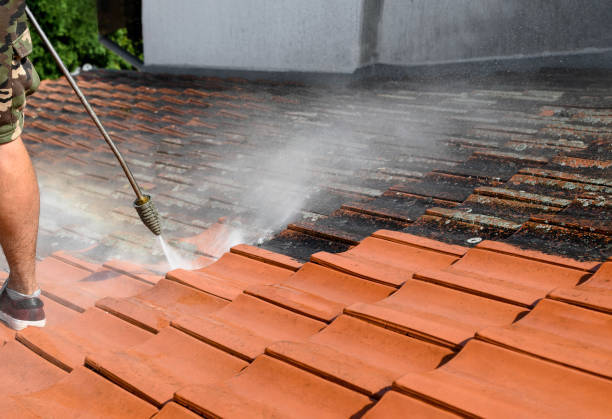
Our heated roof cleaning service uses low-pressure hot water, applied at 60°C, to break down and lift moss, algae, lichen and general debris from roof tiles. The heat does the work that pressure would otherwise have to do, which is what makes it possible to clean thoroughly without the tile damage risk associated with high-pressure washing.
This method is particularly effective on established, stubborn moss growth, the kind that’s built up over several years and formed a thick mat across the tile surface. Because the water temperature does most of the cleaning work, heated cleaning tends to lift this kind of growth more completely in a single visit than a softwash alone would.
Heated cleaning is generally the right call when:
- Moss coverage is heavy, matted or has been left untreated for several years
- Your roof is concrete or clay tile and structurally sound
- You want the fastest route to a full, visible reset before selling or as part of a wider exterior refresh
What Is Roof Softwashing?
Our roof softwashing service takes the opposite approach: no pressure and no heat. Instead, we apply a low-pressure water spray combined with biodegradable biocides that kill algae and lichen at the surface. The growth is left to die back and wash away naturally over the following weeks, rather than being physically stripped off in one visit.
This makes softwashing the gentler of the two methods, and it’s the one we’d typically recommend for older, more fragile roofs, listed buildings, or tiles that are already showing signs of wear. It’s also a strong preventative option, used regularly, it keeps light algae and organic growth from ever reaching the point where heavier intervention is needed.
Softwashing is generally the right call when:
- Your roof is older, fragile, or on a listed or heritage property
- Growth is light to moderate rather than heavily established
- You’re maintaining a roof that’s already clean and want to keep it that way between deeper cleans
Heated Cleaning vs Softwashing: A Side-by-Side Comparison
| Feature | Heated Roof Cleaning | Roof Softwashing |
|---|---|---|
| Method | Low-pressure hot water, applied at 60°C | Low-pressure water spray with biodegradable biocides — no heat |
| Best suited to | Concrete and clay tiles with heavy moss, algae or lichen build-up | Fragile, older or listed-building roofs, and lighter contamination |
| Pressure used | Low pressure (heat does the work, not force) | Low to no pressure at all |
| Typical result life | Around 12–36 months, longer with a moss inhibitor treatment | Roughly 3–5 years, depending on shade and exposure |
| Good for | Stubborn, established moss growth | Preventative maintenance and gentle upkeep |
Does Your Roof Type Affect the Decision?
Tile material matters as much as moss coverage. Clay and concrete tiles respond differently to heat and moisture, and porous, older tiles are more vulnerable to damage from the wrong method. We’ve covered this in more depth in our companion article, Clay vs. Concrete Roof Tiles: Do They Need Different Cleaning Methods? – worth a read if you’re not sure which tile type your property has.
Why a Roof Assessment Comes First
This is the part that gets missed in most DIY research: neither method should be chosen based on a general rule of thumb. At A&R, we always start with a physical assessment of the roof’s condition, tile type, moss coverage and access before recommending a method, this is standard practice among Smartseal-accredited roof cleaning specialists, and it’s the only way to avoid recommending a treatment that’s wrong for your specific roof.
In many cases, the two methods work together rather than as alternatives. A heavily mossed roof might need an initial roof moss removal and heated clean to strip back established growth, followed by a lighter softwash treatment on subsequent visits to keep regrowth under control. We’ll always explain the reasoning behind our recommendation rather than defaulting to one method across every job.
Protecting the Result: Roof Sealing and Gutter Clearance
Whichever cleaning method suits your roof, the result lasts longer when it’s protected. Applying a roof sealing treatment afterwards helps slow moss regrowth and keeps tiles looking refreshed for longer. It’s also worth checking that your gutters are clear once cleaning is complete, moss and debris dislodged during the clean can end up blocking guttering, and a blocked gutter left over a wet UK winter is a common cause of overflow staining and damp. Our gutter cleaning service is commonly booked alongside roof work for exactly this reason.
For a broader look at moss, algae, cleaning methods and restoration across UK roofing, our team has also put together a longer resource:
The Complete UK Homeowner’s Guide to Roof Cleaning & Restoration
When Is the Best Time of Year to Book?
Roof cleaning can be carried out across most of the year in the UK, with brief postponements only for heavy rain, snow or ice on the day itself. That said, spring and summer tend to give the fastest drying times and the best visible results, since tiles have longer to dry between any rainfall. If you’re planning ahead, booking before autumn, when leaf fall and shorter daylight hours accelerate damp and organic build-up, tends to give the longest-lasting results heading into winter.
How A&R Chooses the Right Method for Your Roof
Every quote starts with a free site survey (or photo-based assessment where a visit isn’t practical), where we look at tile type, moss and algae coverage, roof pitch, access and the overall condition of the roofing structure. From there, we recommend heated cleaning, softwashing, or a combination of the two, always with the reasoning explained, never as a default package.
All of our packages, from a straightforward softwash-only clean through to a full heated clean with biocide treatment, gutter clearance and tile sealing, are outlined on our packages page, including our moss-free guarantee.
Get a Free, No-Obligation Assessment
Not sure which method your roof needs? That’s exactly what our free site survey is for. Request a quote and one of our Smartseal-accredited team will assess your roof and recommend the right approach, No guesswork, No upselling and every job comes with our moss-free guarantee.
Call Now