
The Complete UK Homeowner’s Guide to Roof Cleaning & Restoration
Everything UK homeowners need to know about moss, algae, cleaning methods, restoration and how to choose a roof cleaning company you can trust.
A roof rarely fails all at once. It’s usually a slow build-up of moss, algae and trapped moisture that goes unnoticed until tiles start slipping, gutters start overflowing, or a damp patch appears on a bedroom ceiling. Roof cleaning and restoration is one of the most overlooked areas of home maintenance in the UK, largely because roofs are out of sight and, for most homeowners, out of mind. This guide walks through what actually causes roof deterioration, the difference between cleaning and full restoration, how the professionals approach the job safely, and what to look for when choosing a roof cleaning company for your own home.
Why UK Roofs Need Regular Cleaning
The UK’s damp, temperate climate is close to ideal for moss and algae growth. North-facing roof slopes, roofs shaded by trees, and older properties with more textured tiles are particularly prone to it. Left untreated, moss doesn’t just look unsightly, it holds moisture against the tile surface, which in freezing conditions can cause cracking, and it can lift tile edges enough to let water track underneath into the roof structure. Not all tiles clean the same way – see our full breakdown of clay vs. concrete roof cleaning methods.”
Algae staining, usually appearing as black or green streaking, is more cosmetic in the early stages but tends to worsen over time and can affect kerb appeal and even property valuations if left for years without attention.
Roof Cleaning vs Roof Restoration: What’s the Difference?
Roof cleaning
This covers the removal of moss, algae, lichen and general debris from the roof surface, typically using manual scraping combined with a soft wash or biocide treatment. It’s a maintenance job, and how long a clean lasts typically depends on location and roof aspect.
Roof restoration
Restoration goes further. Once the roof is fully cleaned, any damaged or displaced tiles are repaired or replaced, ridge tiles and mortar are checked, and a protective coating or sealant may be applied to extend the life of the roof and improve weather resistance. Roof cleaning and restoration together address both the appearance and the long-term structural health of the roof, rather than treating them as separate problems.
Residential Roof Cleaning: What the Process Actually Involves
For most homes, professional residential roof cleaning follows a fairly consistent sequence, though the exact approach depends on roof type, tile material and the severity of moss or algae growth.
- Initial inspection, checking for loose, cracked or slipped tiles before any cleaning begins.
- Manual moss removal, scraping heavy moss growth away by hand to avoid damaging the tile surface.
- Soft washing or biocide treatment, breaking down algae and remaining organic growth without high-pressure water that can force moisture under tiles.
- Gutter clearance, removing moss and debris that has washed into gutters during the clean.
- Rinse and final inspection, a low-pressure rinse followed by a check for any issues uncovered during the process.
- Optional sealant or biocide aftercare, applied to slow down regrowth and protect the tile surface for longer.
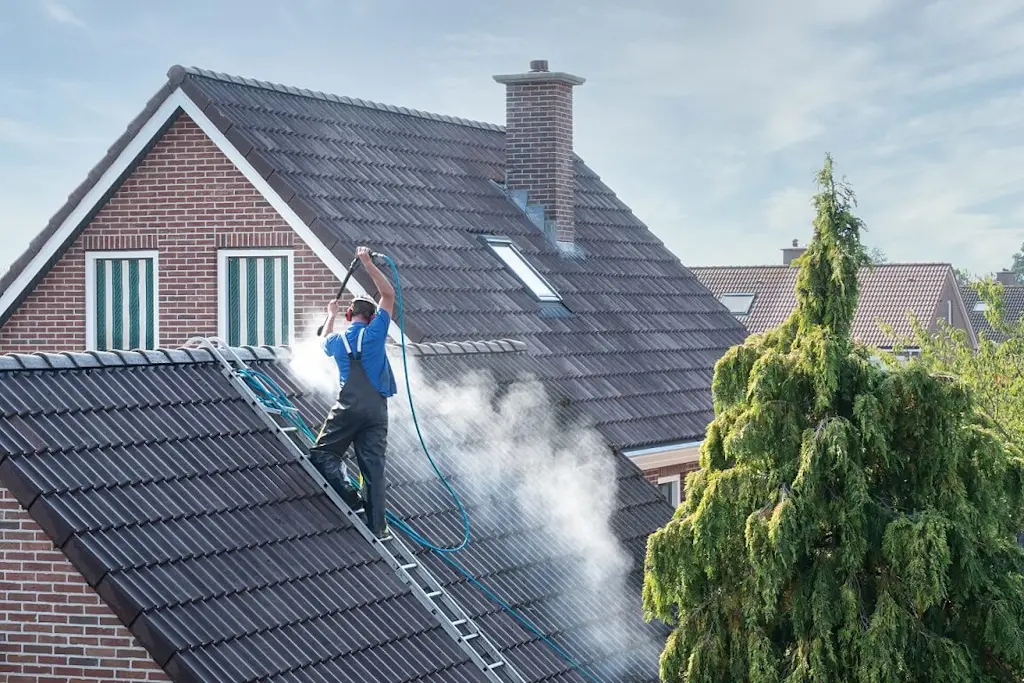
A note on pressure washing
High-pressure jet washing is one of the most common causes of roof damage seen on UK homes. It can strip the protective granules from tiles, force water under the tile line, and shorten the roof’s lifespan rather than extend it. A reputable roof cleaning company will use manual removal and soft washing rather than aggressive pressure washing on tiled roofs.
For a closer look at when pressure washing is and isn’t safe, see our guide to high pressure roof cleaning risks.
How Much Does Professional Roof Cleaning Cost?
Costs vary by roof size, pitch, access and the level of moss build-up, and pricing can differ meaningfully between regions. For a full breakdown of current UK pricing by method and roof type, see our dedicated roof cleaning cost guide, which is kept updated with typical price ranges for cleaning, biocide treatment and sealing.
DIY Roof Cleaning vs Hiring a Professional
It’s technically possible to clean a roof yourself, but it’s worth being realistic about the risks. Roof work involves working at height, often on a sloped and potentially slippery surface, and the wrong cleaning method can cause damage that costs far more to repair than the original clean. Professional roof cleaning services carry the insurance, training and safety equipment needed to do the job without putting the homeowner or the roof at risk.
For low-level single-storey extensions with easy, safe access, a careful DIY approach to light moss removal may be reasonable. For anything involving a ladder against a main roof slope, calling in professional roof cleaners is the safer and, in most cases, more cost-effective choice once you factor in the risk of a fall or accidental tile damage.
How to Choose the Right Roof Cleaning Company
Not all roof cleaning services are equal, and the UK market includes a wide range of operators, from established, trade-certified companies to informal outfits with a pressure washer and a van. A few checks help separate the two:
- Ask about qualifications, City & Guilds training and IPAF certification for working at height are good signs of a properly trained team.
- Check for public liability insurance, ideally with proof available on request.
- Ask which cleaning method they use, and be cautious of any company that only offers high-pressure jet washing for tiled roofs.
- Look for evidence of past work, photos, reviews, or references from other local homeowners.
- Get a written quote that specifies exactly what’s included, including gutter clearance and any biocide or sealant treatment.
If you’re searching roof cleaning near me and comparing quotes, the cheapest price isn’t always the best value. A lower quote that skips proper moss removal, uses aggressive pressure washing, or excludes gutter clearance can end up costing more in repairs down the line.
Finding Local Roof Cleaners You Can Trust
Local roof cleaners tend to have a better understanding of regional roof types, common local issues such as tree coverage or coastal salt exposure, and typical council or conservation area requirements for older properties. Where possible, choosing a locally based roof cleaning company also makes it easier to get a same-week site visit and a more accurate quote, since regional pricing and access considerations vary across the UK.
Signs Your Roof Needs Cleaning or Restoration
| Sign | Likely issue | Recommended action |
| Green or black staining on tiles | Algae or lichen growth | Soft wash and biocide treatment |
| Visible moss clumps, especially on north-facing slopes | Moss build-up trapping moisture | Manual moss removal and soft wash |
| Gutters overflowing during rain | Moss and debris blocking gutters | Gutter clearance alongside roof clean |
| Slipped or cracked tiles | Frost damage or age-related wear | Inspection and roof restoration |
| Damp patches on ceilings below the roofline | Possible water ingress through damaged tiles | Urgent inspection and repair |
Maintaining Your Roof Between Professional Cleans
A small amount of ongoing care can extend the time between full professional cleans and catch problems early.
- Check gutters twice a year for moss and leaf build-up, particularly after autumn.
- Trim back overhanging branches that keep sections of the roof shaded and damp.
- Look for early moss growth after wet winters and book a clean before it spreads.
- Keep an eye out for slipped tiles after storms, since even one displaced tile can let water in.
Related Reading
Can You Pressure Wash a Roof With Solar Panels? What UK Homeowners Need to Know
Book a free roof inspection
Our Smartseal-accredited, City & Guilds and IPAF-certified team covers roof cleaning and restoration across the region, get a no-obligation quote today.
Call Now