
High Pressure Roof Cleaning: When It’s Safe, When It’s Risky & What to Choose Instead
A moss-covered roof with dark streaks running down every tile looks like exactly the kind of problem a powerful jet wash should solve in an afternoon. It’s a reasonable instinct pressure washing works brilliantly on a patio or driveway, so why not a roof? The honest answer is that a roof isn’t a patio. It’s a layered, interlocking system designed to shed water, not take a direct hit from one, and treating it the same way you’d treat a slab of concrete is where most roof pressure washing horror stories begin.
We get asked about high pressure roof cleaning more than almost any other topic, usually by homeowners who’ve had a quote from one company recommending it and another warning against it. Both can be right, depending on the roof. Here’s how to tell the difference, based on what we actually see on roofs across UK.
What Is High Pressure Roof Cleaning, Exactly?
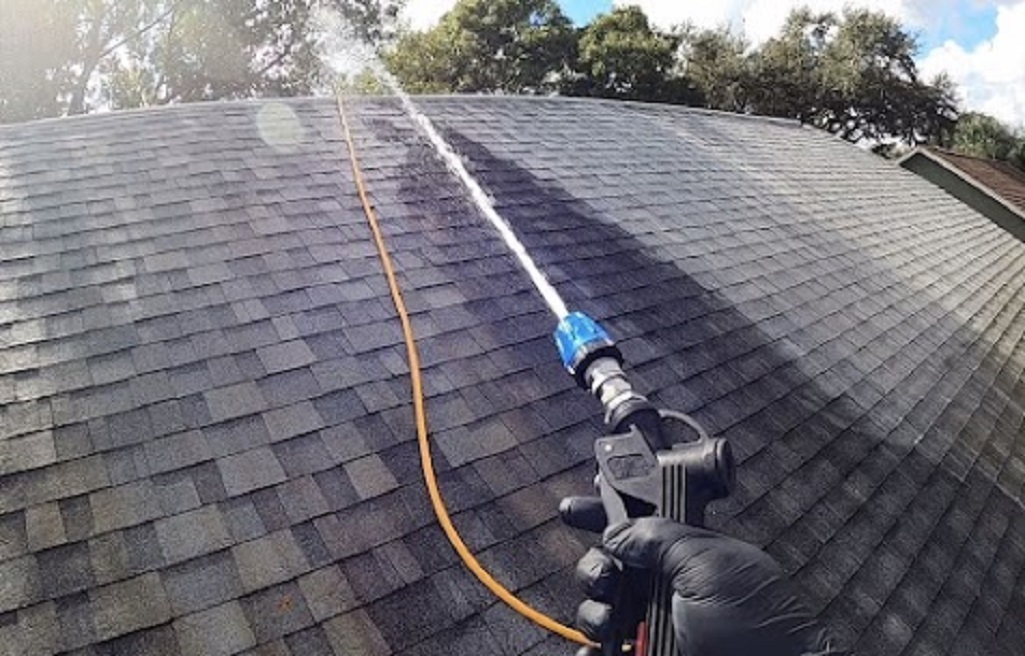
High pressure roof cleaning, also called roof pressure washing, uses a concentrated jet of water to blast moss, algae, and staining off the tile surface. It’s fast, it looks dramatic, and on the right roof it can genuinely work well. The trouble starts when a roof tile pressure cleaner is used at the wrong setting, angle, or distance, which can force water underneath tiles rather than simply cleaning their surface and once water gets past the tile, the damage is happening somewhere you can’t see it.
When High Pressure Roof Cleaning Can Actually Be Safe
The tiles are sound
Roofs with strong, uncracked, properly seated tiles can generally tolerate a controlled clean without issue. It’s when tiles are already brittle, chipped, or loose that a jet of water becomes a lever rather than a cleaner.
The roof is reasonably modern
Older concrete and clay roofs lose surface strength over time. A roof that’s twenty or thirty years old has usually weathered enough that what was once a safe pressure setting no longer is.
It’s being done by someone who knows what they’re doing
This is the variable that matters most. In trained hands, a roof pressure washer is used at a specific angle, distance, and pressure calibrated to the tile type nothing like the settings you’d use on a driveway. Most of the damage we’re called out to repair wasn’t caused by pressure washing itself, but by someone using driveway settings on a roof.
When It’s Genuinely Risky
- Cracking or loosening tiles, particularly on older or clay roofs
- Forcing water underneath tiles, where it causes damp, mould, and slow leaks you won’t notice until they’ve spread
- Damaging ridge pointing and flashing around chimneys and valleys
- Stripping the protective surface off concrete tiles, leaving them more porous and frost-vulnerable
- Leaving moss spores behind, so growth returns within a season without proper aftercare
That last point catches a lot of homeowners out. Even a technically successful jet wash roof tiles job can look clean for a few months and then moss creeps straight back, because pressure alone doesn’t kill the spores sitting in the gaps.
A Safer Alternative: Zero Pressure Roof Cleaning
For most UK roofs, we recommend zero pressure roof cleaning, also known as soft washing, instead. Rather than blasting growth off the surface, this method scrapes off bulk moss by hand, applies a specialist cleaning solution, and lets it work over time to break down algae and organic growth at the root without a jet of water anywhere near the tiles.
It takes a little longer than a straightforward roof pressure cleaning job, but the results tend to last considerably longer, and there’s no risk of forcing water under a tile that was never designed to take a direct hit.
| High Pressure Roof Cleaning | Zero Pressure Roof Cleaning | |
| Risk to tiles | Can crack, loosen, or strip older tiles | No direct impact force on the tile surface |
| Risk of leaks | Water can be forced under tiles | Minimal no high-force water application |
| Moss regrowth | Often returns without separate treatment | Slower regrowth when paired with biocide aftercare |
| Best suited to | Sound, modern, well-fitted roofs only | Most UK roofs, including older or fragile tiles |
| Speed | Faster on the day | Takes a little longer, lasts considerably longer |
Pairing your clean with aftercare
A biocide roof treatment after cleaning kills leftover moss spores and slows regrowth significantly. Skipping this step is one of the most common reasons a freshly cleaned roof looks patchy again within a year, regardless of which method was used.
Is High Pressure Cheaper in the Long Run?
A high pressure quote often looks like better value on paper, but it rarely accounts for what happens if something goes wrong. A cracked tile, a slow leak that takes months to show up as a ceiling stain, or ridge pointing that needs repointing after the fact can turn a cheap clean into an expensive repair bill. When comparing roof cleaning prices, check exactly what’s included moss removal, gutter clearing, aftercare treatment, and inspection rather than comparing headline figures alone. A slightly higher quote that includes zero pressure roof cleaning and proper aftercare is very often the better-value option once you factor in what it protects you from.
How to Choose the Right Roof Cleaning Company
If you’re comparing local roof cleaners, look for a company that:
- Explains clearly which method they’ll use and why, rather than defaulting to whatever’s fastest
- Avoids unnecessary high pressure on tiles that can’t safely take it
- Includes aftercare treatment as standard, not as a pricey add-on
- Has genuine local reviews, not just testimonials on their own site
- Gives clear, itemised pricing with no hidden extras
A company that’s confident in its process will happily talk you through why a particular method suits your specific roof, rather than pushing the same approach on every job regardless of tile type or age.
The Bottom Line
High pressure roof cleaning isn’t inherently wrong on the right roof, done correctly, it can work well. But for a large share of UK homes, particularly anything with older or more delicate tiles, a gentler method gives a longer-lasting result with far less risk. If you want a roof that stays clean rather than one that just looks clean for a season, choose a method that respects what the roof is actually made of.
Not Sure Which Roof Cleaning Method Is Right for You?
A&R Roof & Hard Surface Cleaning & Restoration assesses every roof before recommending a method. Call 01582 757304 or request a free, no-obligation quote below.
Call Now