
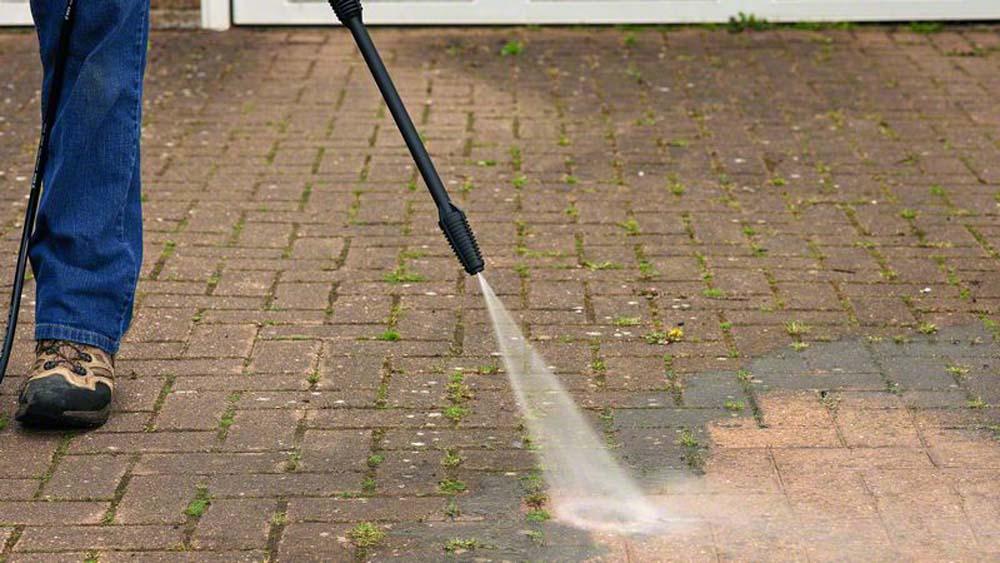
Why Do Weeds Keep Coming Back After My Driveway Was Cleaned?
It’s one of the most common calls we get, usually about eight or nine months after a job: “You cleaned our drive in the spring, it looked brilliant, and now the weeds are back between the blocks again.” It’s a fair complaint, and it’s almost never actually a sign the original clean was done badly. It’s a sign that cleaning and weed prevention are two different jobs, and most driveways only ever get the first one.
It’s Not the Cleaning That Failed, It’s What Happens After
A pressure wash lifts what’s sitting on the surface: the moss, the algae, the visible weed growth itself. What it doesn’t do is deal with what’s underneath, seeds already lodged in the jointing sand, and roots that have snapped off at soil level but are still very much alive below it. Within a few weeks of a clean, that gap between the blocks is actually a better spot for a seed to germinate than it was before, because it’s been cleared of competition and opened back up to light and rain.
The Real Reasons Weeds Keep Coming Back
- Jointing sand washes out over time (pressure washing speeds this up if it isn’t done carefully), leaving a gap that’s perfect for seeds to settle into.
- Wind and birds bring in fresh weed seed constantly, you’re never actually starting from zero, even right after a clean.
- Pulling weeds by hand or strimming them usually leaves the root system intact below the joint, so the same plant regrows from the same spot.
- Shaded, north-facing driveways stay damp for longer after rain, and damp joints germinate seed faster than ones that dry out quickly.
- A driveway that’s never been sealed has no barrier stopping water, light and seed from settling straight into the joints.
What Most Homeowners Get Wrong
The instinct after a clean is to treat weeds as they appear, a quick pull, maybe a supermarket spray, and move on. That keeps the drive looking tidy for a few weeks, but it doesn’t touch the two things actually driving regrowth: the open joints and the seed bank sitting in the sand. It’s the same logic we cover in our piece on driveway cleaning vs pressure washing, a wash on its own was never meant to be the whole job, just the first half of it.
How to Actually Break the Cycle
This is the part that gets left out of most driveway advice, so here’s what genuinely changes the outcome, in the order it actually needs doing:
- Remove weeds properly, root and all, rather than strimming the visible growth, a flame weeder or a proper root-out tool does this without chemicals, if you’d rather avoid spraying near planting.
- Re-sand the joints properly after cleaning. Kiln-dried sand is the standard, but a polymeric or weed-inhibiting sand hardens in the joint rather than sitting loose, which makes it much harder for seed to take hold in the first place.
- Seal the surface. This is genuinely the single biggest factor, a properly sealed driveway closes the joints against light and moisture, and most homeowners who reseal alongside cleaning tell us it’s the year they finally stopped fighting the same weeds every spring.
- Keep an eye on drainage. Water pooling against one edge of the drive keeps that section permanently damp, and damp joints are always the first to go.
- Treat little and often rather than waiting for a full regrowth. A five-minute check every few weeks catches new seedlings before they’ve had time to root properly.
A Driveway We Went Back To
We cleaned a block paving drive in Radlett a couple of years ago that came back mossy and weedy within about ten months, not unusual on its own, except the homeowner was doing everything right on the surface: pulling weeds weekly, keeping it swept. What we found on the return visit was that the original job (done by someone else) had used ordinary building sand rather than kiln-dried, and it had already washed out of half the joints. No sand meant no barrier, so every seed that landed had a clear run. Re-sanding properly and sealing it that time round has kept it clear ever since.
Does This Apply to Tarmac and Resin Too?
Slightly differently. Tarmac doesn’t have joints in the same way, but cracks in the surface act the same way a gap in block paving does, seed gets in, roots take hold, and the crack widens as the root grows. Our guide to common tarmac issues covers this in more depth. Resin, if it’s been laid properly, is one of the more weed-resistant surfaces going, since there’s no loose jointing material for seed to settle into, but a resin drive with any surface damage or edge lifting can develop the same problem at that one weak point.
The Honest Bottom Line
Weeds will always come back to some degree, that’s just gardening in the UK climate, and no driveway is completely immune. But “a few new seedlings a year that take five minutes to deal with” and “the whole drive overrun again by autumn” are two very different outcomes, and the difference almost always comes down to whether the joints were properly re-sanded and sealed after the last clean, not how carefully anyone pulled weeds in between.
Related Reading
For the full process behind a proper clean, see our Driveway Cleaning and Sealing: Complete UK Homeowner’s Guide, and if you’re not sure your driveway needs attention yet, our signs your driveway needs professional cleaning guide will help. For stains rather than weeds, see how to remove oil and tyre stains.
Call Now